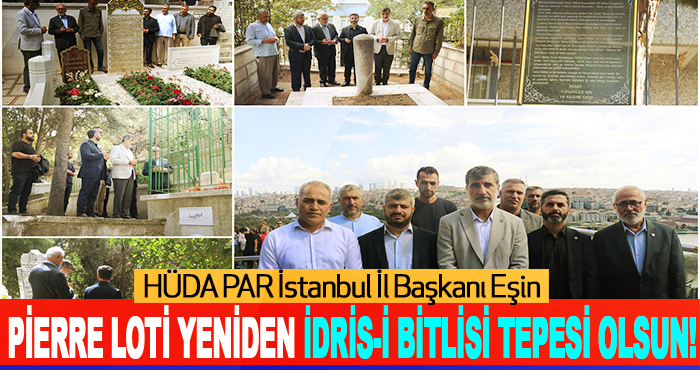
Growing calls to rename the historic hill in Eyüpsultan—one of Istanbul’s spiritual hearts—have sparked intense public debate, reigniting controversy over the vast collection of Ottoman artifacts transported to France by French naval officer and author Pierre Loti (born Julien Viaud).
Advocates seeking to restore the hill’s historical name, "İdris-i Bitlisî", are shining a harsh spotlight on Loti’s contested persona and the thousands of Ottoman artifacts currently exhibited at his house-museum in Rochefort, France.
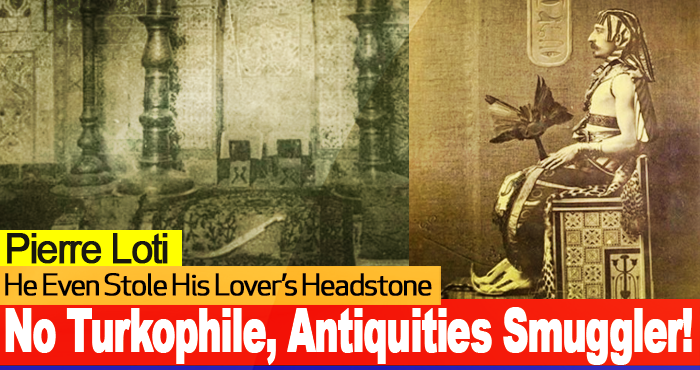
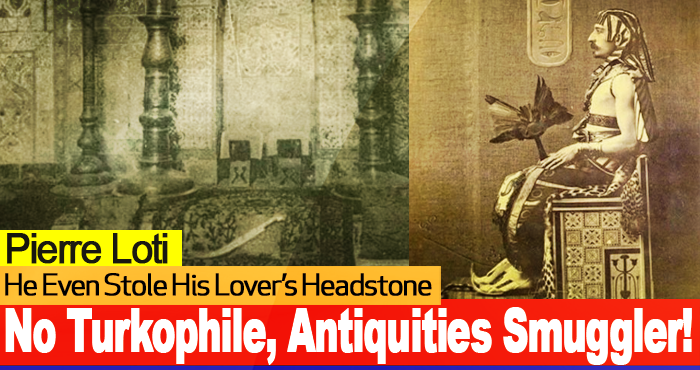
27,000 artifacts in his Rochefort residence: The "Turkish salon" and the "Mosque room"
Critics argue that framing Loti simply as an "Orientalist collector" is a convenient euphemism designed to mask historic cultural looting. They point out that the stark reality remains on full display at his former home in Rochefort.
Reopened to the public in 2025 following a thorough 12-year restoration—during which roughly 27,000 items were individually cataloged—the house features a "Turkish salon" and a "mosque room" fitted with authentic İznik and Kütahya tiles, carved wooden ceilings, Quran stands (rahles), calligraphy panels, mosque oil lamps, and historic Ottoman ceramics.
The most controversial centerpiece of this collection remains the tombstone of Aziyadé (Hatice), his Ottoman lover, an incident recorded in Loti’s own diaries. In 1904, Loti reportedly removed the original headstone from the Topkapı Cemetery, replaced it with a replica, and shipped the authentic artifact to France. Under modern cultural heritage laws, this act constitutes an unauthorized removal of antiquities and de facto illicit trafficking.
"Collector or privileged looter?"
Viewed through modern historical and legal lenses, Loti's acquisitions exploited glaring regulatory loopholes of the late Ottoman era. Experts note that until the 1884 Antiquities Regulation (Âsâr-ı Atîka Nizamnâmesi)—spearheaded by Osman Hamdi Bey—restrictions on moving cultural property abroad remained largely ineffective. Loti leveraged his status as a naval officer alongside high-level diplomatic privileges to ship crates filled with Ottoman heritage to France.
While parts of his collection were purchased in bazaars or gifted by prominent figures—such as the last Ottoman Caliph, Abdülmecid Efendi, who presented him with paintings—many other items, including antique ceramic tiles and carved woodwork, were stripped from abandoned or neglected historical monuments.
How did he ship them?
Between 1870 and 1913, Julien Viaud visited Istanbul seven times. As a commissioned naval officer operating close to diplomatic and military networks, he routinely transported personal trunks and cargo without facing rigorous customs scrutiny.
French records frankly classify these holdings as "objets rapportés de Turquie" (objects brought back from Turkey). According to his own records, the thousands of artifacts in his Rochefort residence were accumulated throughout his naval deployments and journeys across the Orient during the late 19th century—leaving behind a disputed legacy that continues to stir outrage over stolen cultural patrimony.